How to manage homework and sports in high school
Manage homework and sports in high school by planning study sessions around classes, practices, and games. Giving each assignment time before its deadline shows whether the week’s workload fits.
By Scrap · Updated
1. Plan the week around practices and games
Include team travel, changing, and the trip home when you add practices and games to your calendar. A two-hour practice can occupy more than two hours of the afternoon.
2. Break homework into timed tasks
Write each assignment as a specific action with an estimated duration. A task such as “solve algebra questions 1–12, 40 minutes” defines what to finish within one study block.
Divide longer projects into stages such as research, outline, draft, and revision. Each stage can then fit a separate session without leaving the entire project for one evening.
3. Use the gaps before and after practice
Use study hall or a gap before practice for flashcards, reading, or reviewing assignment instructions. These tasks can stop at a clear point when practice starts.
Reserve uninterrupted blocks for problem sets and writing. These assignments need time to work through a question or develop an argument.
Schedule demanding work before practice if you have more energy then. A tired evening may be better suited to checking or submitting finished work.
A sample homework schedule for a practice day
Use this example to check how much homework can fit into a practice day. It provides two 40-minute study blocks after school ends at 3 p.m. and practice runs from 3:30 to 5:30 p.m.
| Time | Plan |
|---|---|
| During study hall | 20 minutes of reading or a short assignment, if your school day allows. |
| 3:00–3:30 p.m. | Snack, change, and get to practice. |
| 3:30–5:30 p.m. | Practice. |
| 5:30–6:30 p.m. | Travel home, shower, and eat dinner. |
| 6:30–7:10 p.m. | Math homework. |
| 7:10–7:20 p.m. | Take a break. |
| 7:20–8:00 p.m. | Work on the English assignment due next. |
| 8:00–8:15 p.m. | Submit finished work, check tomorrow’s deadlines, and pack your bag. |
| 8:15–9:30 p.m. | Free time and getting ready for bed. |
| 9:30 p.m.–6:30 a.m. | Sleep. |
4. Plan for away games and late returns
Complete assignments due the morning after an away game before you leave. Travel and changing return times make that evening’s availability uncertain.
Keep bus work optional. Noise, motion, and unreliable internet can make travel time unsuitable for completing an assignment.
Confirm submission arrangements with your teacher when a game conflicts with a deadline. A sports absence does not necessarily change when work is due.
5. Set a homework cutoff
Set a homework cutoff that protects enough time for sleep. The CDC lists a recommendation of 8 to 10 hours of sleep per 24 hours for ages 13–18.
6. Adjust an overloaded schedule
Reorder unfinished work by its next deadline when your plan changes. This reduces the risk of missing an immediate deadline while working on a task due later.
Ask a parent, guardian, or school counselor to review your commitments if assignments repeatedly exceed available time. An ongoing shortfall may require fewer optional activities or additional academic support.
What we built
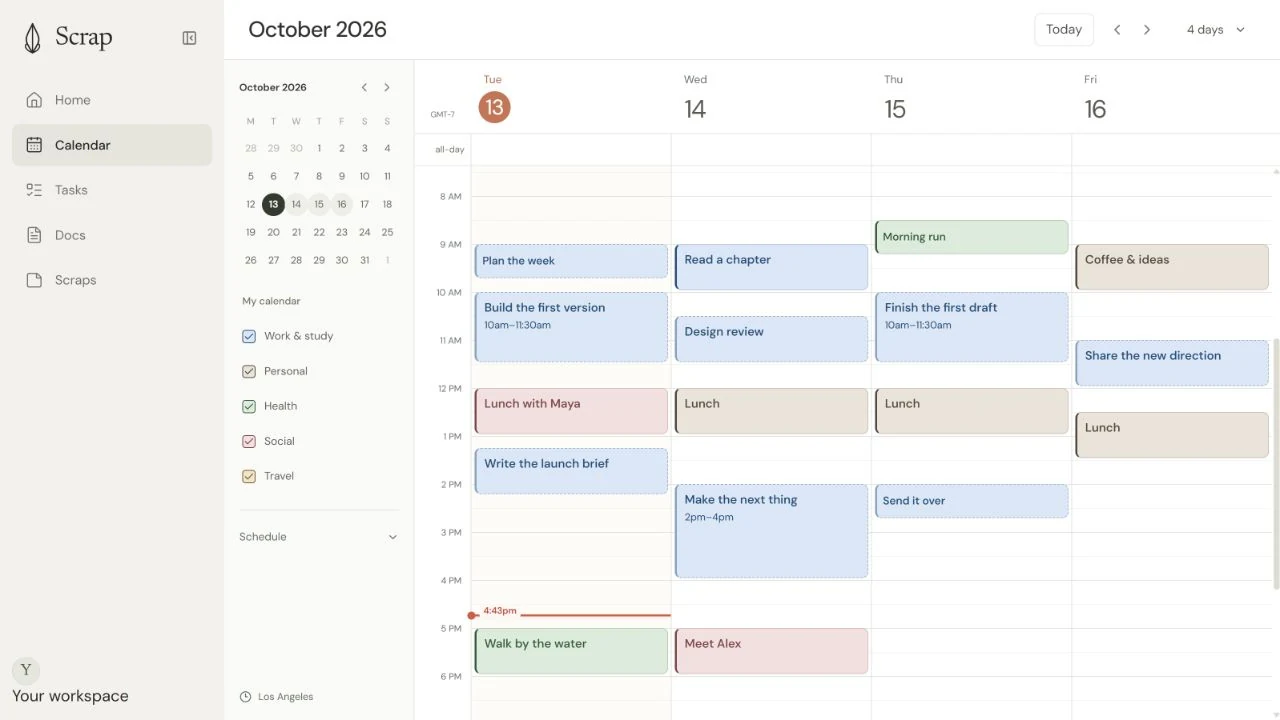
We built Scrap to schedule homework around classes, practices, and games. Scrap Pro uses each task’s deadline and time estimate to reserve study sessions in available hours.
Start with a 7-day Pro trial. A card is required, and pricing lists the cost after the trial.